

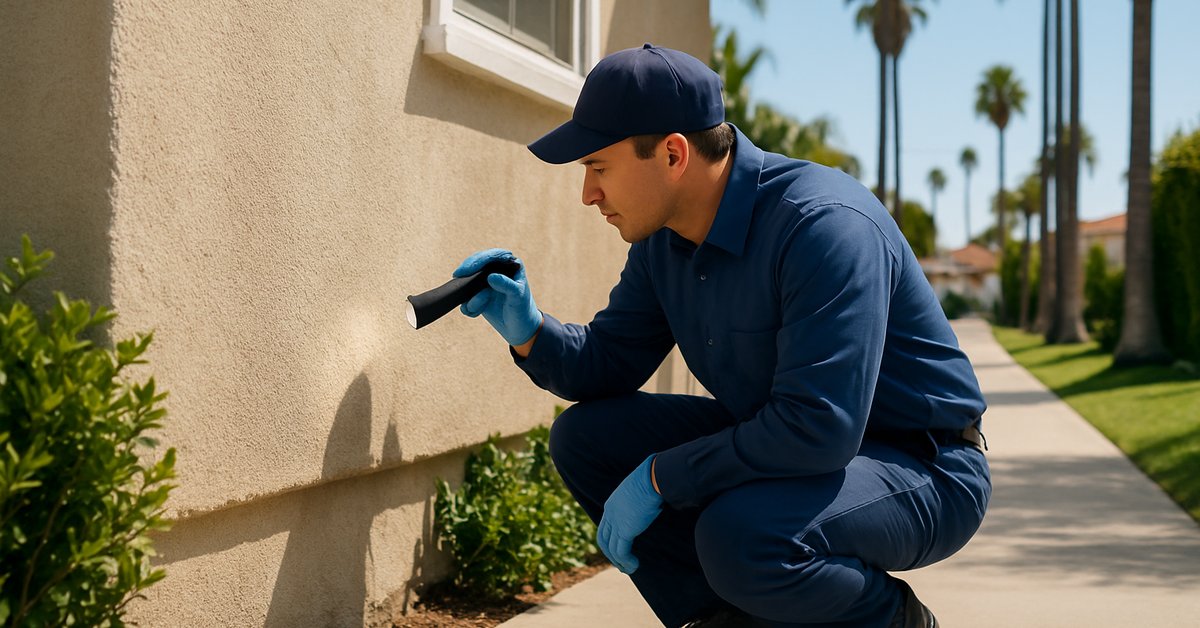
You’ve already treated for mice once. Maybe twice. And they’re back. That’s the most common call a mice exterminator gets in Los Angeles, and it’s almost never because the first treatment failed at killing rodents. It’s because nobody sealed the building. In Los Angeles, older craftsman homes, hillside properties, and aging apartment buildings give mice dozens of entry points — gaps around pipes, open weep holes, deteriorating foundation vents — and until those are closed, every treatment is just a temporary fix. This guide covers the full scope of what a real exterminator engagement looks like, from first inspection through attic cleaning, so you can stop the cycle for good.
Before you hire anyone, get a free estimate from a licensed Los Angeles mice exterminator with same-day availability to see exactly what entry points and damage you’re dealing with.
Why Do Los Angeles Homes Keep Getting Mice — Even After Treatment?
Repeat infestations happen when trapping is done without exclusion. Traps and bait stations kill the mice that are already inside. But if the entry points stay open, new mice from outside move in within days, sometimes hours. In Los Angeles, this cycle is especially persistent because of the urban density and year-round mild climate that keeps rodent populations active all twelve months.
The house mouse (Mus musculus) can squeeze through a gap as small as a quarter-inch. That’s roughly the diameter of a pencil. Common entry points in Los Angeles homes include weep holes in brick facades, open pipe penetrations under sinks, gaps where stucco has cracked along the roofline, and deteriorated crawl space screen vents. Many LA homes were built in the 1940s through 1960s, and those structures have had decades to develop gaps.
There’s another factor specific to LA. The city’s mature tree canopy — especially in neighborhoods like Silver Lake and Los Feliz — gives mice and roof rats aerial access to rooflines and attic vents that most homeowners never even think to check. A mouse that enters through a roofline gap will nest in attic insulation, which then becomes a harborage point that draws rodents back even after interior trapping is complete.
Honestly, most exterminators who offer a one-time spray-and-trap service aren’t lying to you — they’re just not offering the full service. Exclusion and attic remediation are separate line items, and cheaper operators skip them. That’s why you’re reading this article right now.
Which Los Angeles Neighborhoods Have the Worst Mouse Problems in 2026?
Mouse activity in Los Angeles isn’t evenly distributed. Certain neighborhoods see disproportionately high call volumes for rodent control, and the reasons are specific and local.
Silver Lake and Echo Park consistently rank among the highest for rodent complaints in the city. The combination of dense older housing stock, active restaurant corridors, and hillside terrain creates ideal conditions. Mice follow food sources from commercial strips into adjacent residential blocks.
Highland Park has seen a spike in rodent activity tied to ongoing renovation activity in the neighborhood. When older homes are gutted, disturbed mice migrate to neighboring properties. If your block is seeing construction, your risk goes up significantly.
Boyle Heights and parts of East Hollywood have large numbers of pre-1960s homes with original foundation vents and crawl spaces that haven’t been updated in decades. Those structures are the hardest to fully seal without a thorough inspection by someone who knows what to look for.
If you live near a wash, a hillside greenway, or within two blocks of a restaurant corridor anywhere in the city, your risk of reinfestation after a basic treatment is substantially higher. That context matters when you’re deciding whether to invest in full rodent proofing or just a one-time trap service.
What Does a Mice Exterminator Actually Do in Los Angeles?
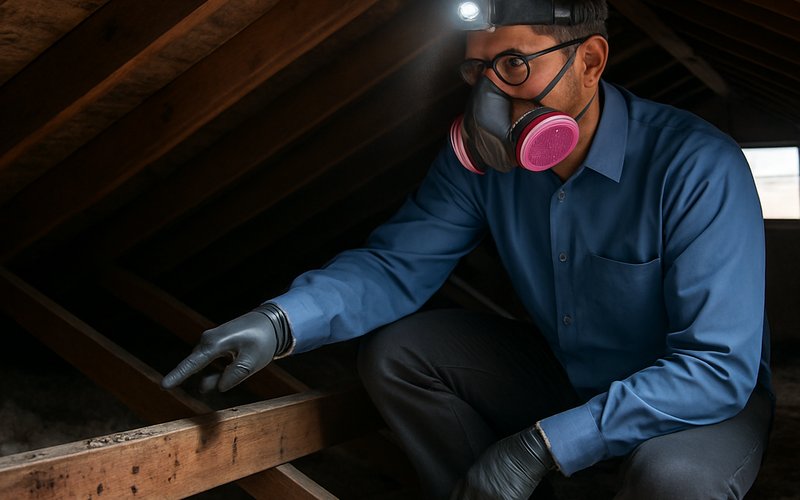
A professional mice exterminator in Los Angeles does far more than set snap traps. The full engagement has four distinct phases, and each one matters if you want a permanent result.
Phase 1: Inspection
A thorough inspection covers the entire exterior perimeter, the attic, the crawl space (if present), and every utility penetration. The exterminator is looking for active entry points, droppings, nesting material, gnaw marks, and grease trails. This takes 45–90 minutes on a typical single-family home. Don’t trust anyone who walks around for 10 minutes and immediately starts quoting.
Phase 2: Trapping and Baiting
Interior snap traps, tamper-resistant bait stations, and sometimes tracking powder are placed based on activity evidence. In Los Angeles homes, placements inside wall voids, attic entries, and under cabinets are standard. The exterminator returns at 3–7 day intervals to check, reset, and document catch counts. Most active infestations are knocked down within 2–3 service visits.
Phase 3: Exclusion (Rodent Proofing)
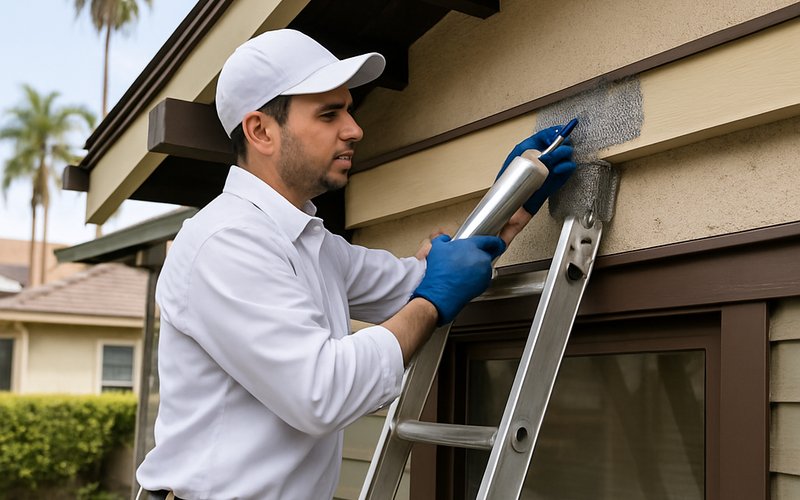
This is the phase most cheap services skip. Exclusion means physically sealing every identified entry point using materials mice can’t chew through: galvanized steel mesh, copper wool backed by caulk, sheet metal flashing, and cement-based fillers for larger gaps. This is the difference between rodent proofing and extermination, and it’s the single most important factor in preventing reinfestation.
Phase 4: Attic or Crawl Space Cleanup
If mice nested in your attic insulation, that soiled insulation is a biohazard and an ongoing attractant. Professional attic cleaning involves removing contaminated insulation, HEPA-vacuuming droppings, fogging with an enzyme-based sanitizer, and re-insulating. This phase adds significant cost but is non-negotiable for health reasons and for breaking the attraction cycle.
How Much Does Mice Extermination Cost in Los Angeles? (Full Breakdown)

In Los Angeles, mice extermination costs range from $300 for a basic trap-and-bait service to over $4,500 for a full-scope engagement that includes exclusion work and attic remediation. What you pay depends almost entirely on what you’re actually buying.
| Service Scope | Typical Cost Range (Los Angeles) | What’s Included | Best For |
|---|---|---|---|
| Basic trap and bait service | $300–$550 | Interior trapping, 2–3 follow-up visits | Very minor, recent activity, no attic access |
| Trap + partial exclusion | $600–$1,200 | Trapping + sealing primary entry points | First-time infestations in newer homes |
| Full exclusion package | $1,200–$2,200 | Complete perimeter sealing, all utility penetrations, vents | Repeat infestations, older homes, hillside properties |
| Full exclusion + attic cleanup | $2,500–$4,500+ | Everything above + insulation removal, sanitizing, re-insulation | Heavy infestations, confirmed nesting in attic |
A homeowner in Silver Lake recently paid $3,200 for a complete package: full perimeter exclusion on a 1940s craftsman, attic insulation removal across roughly 600 square feet, enzyme sanitizing, and blown-in insulation replacement. Their previous exterminator had charged $380 for trapping alone, and mice were back within six weeks.
Your biggest cost driver will be attic square footage and the condition of your home’s exterior. Hillside homes with complex rooflines cost more to fully seal. So do homes with subfloor crawl spaces, which require separate access and more labor. If you want an accurate quote for your specific property, contact a Los Angeles mice exterminator who offers same-day inspections rather than guessing from a phone quote.
Do You Need a Permit for Rodent Proofing or Attic Cleaning in Los Angeles?
Most standard rodent proofing and attic cleaning work in Los Angeles does not require a permit. Sealing exterior gaps, replacing damaged vent screens, and removing soiled insulation are considered maintenance work, not structural alterations.
The exception is attic re-insulation. If a contractor is installing new blown-in or batt insulation after removing the old contaminated material, that work may require a permit through the Los Angeles Department of Building and Safety (LADBS). The specific trigger depends on the R-value of the new insulation and whether any electrical or HVAC components are disturbed during the process.
LADBS permits for insulation work are typically filed online or at a local Building and Safety office. The permit itself is not expensive, usually in the $150–$300 range for residential attic work, but it adds a few days to the project timeline. Ask your contractor directly whether they’ll pull the permit or whether that responsibility falls to you as the homeowner. Licensed contractors in California are required to pull permits for permitted work — if they push the permit onto you, that’s a red flag.
For rodent control treatments involving rodenticide bait stations, California requires that operators hold a valid Pest Control Operator (PCO) license issued by the California Department of Pesticide Regulation (CDPR). Always confirm your exterminator is licensed before they place any bait.
What Happens to Your Attic and Crawl Space After a Mouse Infestation?
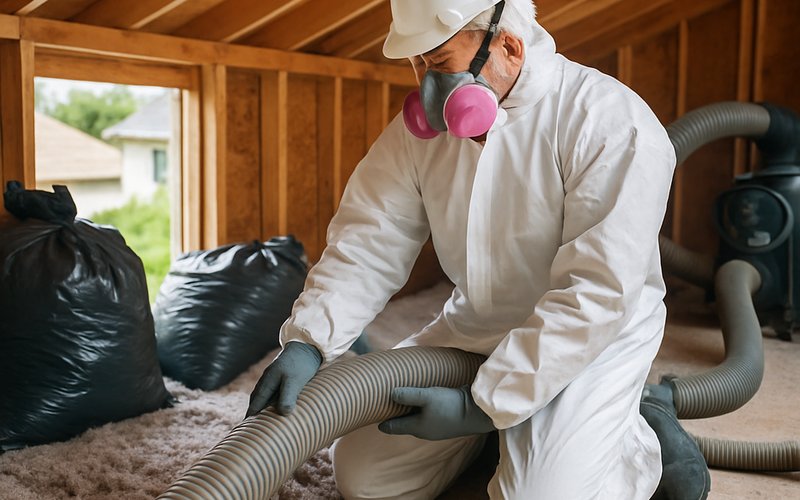
A mouse colony in your attic doesn’t just leave droppings. It leaves behind contaminated insulation, urine-soaked wood, nesting debris, and in some cases, dead rodents inside wall voids. That material stays active as a health hazard long after the mice are gone.
Mouse droppings and urine can carry hantavirus, salmonella, and leptospirosis. Hantavirus is a serious concern in Southern California — the CDC has documented cases linked to rodent droppings disturbed during cleaning. This is not a scare tactic. It’s the reason professional attic remediation involves full respiratory protection, negative air pressure, and enzyme-based sanitizing rather than just sweeping.
Beyond the health risk, soiled insulation loses thermal efficiency. Blown-in cellulose that’s been compressed and saturated with rodent waste doesn’t perform at its rated R-value. You’ll feel it in your energy bills, especially during LA’s summer heat. Re-insulating after cleanup isn’t just sanitary — it pays back over time in energy savings. Proper insulation also acts as a deterrent by eliminating the soft nesting material that makes your attic attractive to rodents in the first place.
Crawl spaces present a slightly different problem. In homes with a subfloor crawl space, mice will nest in the insulation between the floor joists, often dislodging it so it hangs down or falls. That hanging insulation needs to be replaced and properly secured. Vapor barrier damage is also common — mice chew through it, which then allows ground moisture to enter the crawl space and create conditions that attract other pests.
One-Time Fix vs. Long-Term Rodent Proofing: What Los Angeles Homeowners Actually Need
The honest answer is that the right approach depends on your home’s age, its construction type, and how many times you’ve already been treated. Here’s how to think about it.
| Your Situation | Recommended Approach | Why |
|---|---|---|
| First infestation, home built after 1990 | Trap + seal primary entry points | Newer homes have fewer structural gaps; targeted sealing often sufficient |
| Second or third infestation, any home age | Full exclusion package | Repeat activity proves unsealed entry points exist; partial fixes have failed |
| Pre-1970s home, original construction | Full exclusion + attic inspection minimum | Original vents, pipe penetrations, and stucco almost always have gaps |
| Active nesting confirmed in attic | Full exclusion + attic remediation | Contaminated insulation drives reinfestation; can’t skip cleanup |
| Hillside or canyon-adjacent property | Full exclusion + ongoing monitoring | Proximity to open space means constant exterior pressure from wild rodent populations |
The cheaper option isn’t always wrong. If you’re in a newer home, caught the problem early, and your inspection shows one or two obvious entry points, a targeted seal-and-trap service in the $600–$1,000 range may be all you need. But if you’ve already paid for a one-time treatment and mice are back, spending $400 again is just throwing money away. Invest in the full exclusion. It costs more once. It stops the cycle.
For more detail on how these two approaches compare and which situations call for each, see our guide on rodent proofing vs. extermination in Los Angeles.
How to Find a Reliable Mice Exterminator in Los Angeles — Fast
Finding a good mice exterminator in Los Angeles comes down to four things: licensing, inspection quality, exclusion capability, and honest pricing. Most homeowners get burned by skipping at least one of these.
- Confirm a California PCO license. Every company performing rodent extermination with rodenticide must be licensed by the California Department of Pesticide Regulation. Ask for their license number and verify it at the CDPR’s online registry before you sign anything.
- Insist on a written inspection report. A credible exterminator will document every entry point found, with photos if possible. If someone quotes you a price without an inspection, walk away.
- Ask specifically about exclusion. Ask: “Do you seal the entry points, or just trap and bait?” The answer to that question tells you everything about whether this is a permanent fix or a temporary one.
- Get itemized pricing. Trapping, exclusion, and attic cleanup should each be separate line items. A lump-sum quote with no breakdown makes it impossible to understand what you’re actually paying for.
- Check for warranty or guarantee language. Reputable exclusion companies will offer a warranty on their seal work, typically 1–2 years. No warranty usually means no confidence in their own exclusion work.
Response time matters too. Active mouse infestations spread fast — a female house mouse can produce 5–10 litters per year, with 5–6 pups per litter. Waiting two weeks for an appointment while a colony establishes in your attic is not a viable option. 360 Rodent Control offers Los Angeles mice exterminator services with emergency availability, including same-day inspections for active infestations. If you’ve already been through one treatment cycle and mice are back, don’t wait. Get the full inspection, get the exclusion quote, and end this for good.
