

You’re dealing with rats in Tarzana and researching rodent exterminator cost Los Angeles homeowners actually pay before calling anyone. Rodent exterminator costs in Tarzana typically run $400–$2,500 for a standard job, but full-scope work including attic cleanup can reach $3,500–$4,500. Tarzana sits in the western San Fernando Valley where mature oak and avocado canopy and proximity to canyon corridors create some of the most persistent rat pressure in all of Los Angeles. This guide covers every service tier, real project examples, neighborhood-specific price differences, and what to watch for when hiring a contractor.
Get a free estimate from a licensed Tarzana rodent exterminator before you commit to any scope of work.
How Much Does a Rodent Exterminator Cost in Tarzana in 2026?
In Tarzana, rodent exterminator costs break into three clear service tiers depending on the scope of work. A basic inspection runs $75–$150. Trapping with limited exclusion spots mid-tier. Full exclusion with attic remediation sits at the high end.
| Service Tier | Price Range | What’s Included | Best For |
|---|---|---|---|
| Basic | $150–$350 | Inspection, snap-trap placement, 1-2 follow-up visits | Minor activity, single entry point |
| Standard | $400–$900 | Trapping, partial exclusion sealing, bait station setup, 2-3 follow-up visits | Active infestation, multiple entry points |
| Premium | $1,200–$3,500+ | Full exclusion, attic inspection, sanitizing, possible insulation replacement, extended warranty | Heavy infestation, contaminated attic, canyon-adjacent property |
Most Tarzana homeowners end up in the standard-to-premium range. That’s not a surprise given the local environment. Tarzana’s tree canopy, aging housing stock, and proximity to natural corridors all push activity well above the LA average. A homeowner on Corbin Avenue recently paid $680 for trapping plus initial exclusion work on a 1960s ranch home where roof rats had been using overhanging avocado branches as a direct runway to the roofline.
Rodent control costs in Los Angeles aren’t uniform across neighborhoods. But Tarzana consistently lands at the higher end of the valley-wide range because of factors that are genuinely structural, not just contractor pricing. More on those below.
What Drives Rodent Control Prices Up in Tarzana Specifically?
Several factors specific to Tarzana inflate what you’ll pay compared to more urban parts of Los Angeles. The biggest one is geography. Tarzana borders the Santa Monica Mountains foothills, and the Caballero Creek wash corridor runs through the area, creating a natural wildlife highway that funnels rodents directly into residential zones. Rats don’t recognize property lines, and they’ll travel those corridors night after night.
The housing stock matters too. Older Spanish-style and ranch homes in the Braemar and Melody Acres pockets were built with construction standards that today’s pest control operators describe as “full of opportunities.” Uncapped roof vents, aging soffits with gaps, and original fascia boards with no modern weatherstripping give roof rats multiple entry routes. Sealing all of them takes time and materials, which costs money.
Dense oak and avocado tree coverage is the third factor. Roof rats, which dominate Tarzana, are arboreal. They travel by branch, not by ground. A yard with large, overhanging trees is essentially providing free highway access to your roofline. Trimming that canopy back is sometimes a prerequisite for exclusion work to even hold.
Honestly, re-service calls are common on canyon-adjacent streets here. A one-time trap job on a Tarzana property without full exclusion sealing almost never resolves the problem long-term. The environment keeps pushing new animals toward your home, and if entry points are still open, you’re just catching the same wave of animals indefinitely. Contractors who are upfront about this are doing you a favor, not upselling you.
What’s Actually Included in a Rodent Exterminator Service in Tarzana?
Understanding each service line helps you compare quotes without getting lost in contractor language. Here’s what a full-scope rodent exterminator service in Tarzana should include.
Initial Inspection
A thorough inspection covers your attic, crawl space, garage, exterior perimeter, and roofline. The technician is looking for entry points, activity signs (droppings, gnaw marks, grease trails), and nesting areas. This step determines everything else. A good inspection takes 45–90 minutes on a typical Tarzana property.
Trapping
Snap traps are the standard for rodent removal. They’re fast, effective, and don’t leave a carcass problem inside your walls the way some bait methods do. Live traps are an option, but they require more frequent monitoring. Trap placement follows the rats’ travel routes along wall edges and in attic joists.
Bait Stations
LA County has specific rules on anticoagulant rodenticides following California’s 2021 SGR Act restrictions. Second-generation anticoagulant rodenticides (SGARs) like brodifacoum and bromadiolone are prohibited for residential pest control use. Any contractor offering these products for your home should raise a red flag. First-generation rodenticides and non-anticoagulant baits remain legal for licensed operators.
Exclusion Sealing
This is the actual fix. Exclusion work involves sealing every entry point with hardware cloth, steel wool, metal flashing, and exterior-grade caulk or foam. The distinction between “extermination” and “exclusion” is the difference between removing the current population and stopping future entry. Tarzana homes typically have 8–20 entry points on a full inspection. Norway rats, which are ground-level burrowers, differ from roof rats in how they enter, so a good technician identifies which species they’re dealing with before choosing sealing locations.
Attic Insulation Removal and Replacement
When an infestation has gone on for months, attic insulation gets saturated with droppings, urine, and nesting material. Contaminated insulation has to come out. This is typically the highest-cost line item on a full-scope job.
How Much Does Rodent Proofing Cost in Tarzana Compared to Just Trapping?
Trapping alone is a short-term fix. Rodent proofing, which means physically sealing your home’s entry points, is the only long-term solution. In Tarzana’s environment, this distinction is especially important.
| Service Type | Cost Range | Duration of Results | Notes |
|---|---|---|---|
| Trapping only | $150–$400 | Weeks to months | Active population removed, but re-entry likely |
| Full rodent proofing / exclusion | $800–$2,500 | 1–5+ years with warranty | All entry points sealed, guaranteed for 12+ months |
| Trapping + proofing + attic cleanup | $1,800–$4,500 | Long-term | Full-scope resolution, includes sanitizing and re-insulation |
Trapping without exclusion is money wasted in Tarzana’s environment. Roof rats re-enter within 2–4 weeks if entry points aren’t sealed. The surrounding canyon corridors and tree canopy mean there’s always a new population pressure pushing animals toward homes. You’re not solving a contained problem. You’re playing a game you’ll keep losing until the structure itself is addressed.
The cheaper option isn’t always wrong. If you have a truly minor, isolated issue in a newer home with solid construction, trapping alone might hold. But on a 1960s or 1970s ranch in Tarzana with original soffits? Get the exclusion done. If you want an accurate quote for your specific property, see what a full-scope job should include before you call anyone.
Do You Need a Permit for Rodent Control or Attic Cleanup in Tarzana?
Tarzana is an unincorporated community within Los Angeles County. That matters for permitting because you’re not dealing with a city building department. You’re dealing with LA County’s agencies directly.
Rodent control itself, meaning trapping, bait stations, and exclusion sealing, requires no permit. A licensed pest control operator (PCO) can complete full exclusion work without any permit filing. That’s true across unincorporated LA County.
Attic work is different. If a contractor is removing and replacing insulation, that may require a permit through the LA County Department of Public Works, Building and Safety Division, depending on the scope. A straightforward contaminated insulation removal and blow-in replacement in a standard attic often gets done without a permit, but if your contractor is also modifying HVAC ducting, adding vapor barriers, or doing structural work in the attic space, a permit protects you. It ensures the work is inspected and documented, which matters when you sell the home.
Ask your contractor directly: “Are you pulling a permit for the attic work?” If they’re replacing a significant square footage of insulation and wave off the question, push back. Unpermitted attic work can come up as a liability during a home sale in LA County. You want documentation.
What Does Attic Cleaning Cost After a Rat Infestation in Tarzana?
Attic cleaning is frequently the largest line item on a full rodent remediation job. In Tarzana, expect to pay $1,200–$3,000 for a standard 1,200–1,800 square foot attic, depending on the depth of contamination.
The cost varies based on three things: how long the infestation went undetected, what type of insulation is in place, and whether HVAC ducts were damaged. Blown-in insulation is faster and cheaper to remove than batt insulation. Damaged flex ducting adds $300–$800 to the bill on top of the base cleanup cost.
A home in the Melody Acres area of Tarzana recently had full insulation removal, sanitizing, and re-insulation completed for $2,400 after a multi-year roof rat infestation went undetected under blown-in insulation. The homeowner had dismissed the occasional scratching sounds for two winters before the smell from the attic forced the issue. By that point, the contamination was extensive.
Crawl space cleaning, where applicable, runs an additional $600–$1,800. Crawl spaces are more common on hillside properties and older ranch homes in Tarzana, and they’re a common harborage zone for Norway rats. Don’t skip this line item if your home has one.
On the health side, this isn’t just a pest problem. Rodent droppings and urine carry hantavirus and leptospirosis. Both are serious human health risks. Contaminated attic insulation needs professional removal and disposal, not a shop vac job. This is one area where cutting costs genuinely creates danger.
How Do Tarzana Rodent Exterminator Costs Compare Across Neighborhoods?
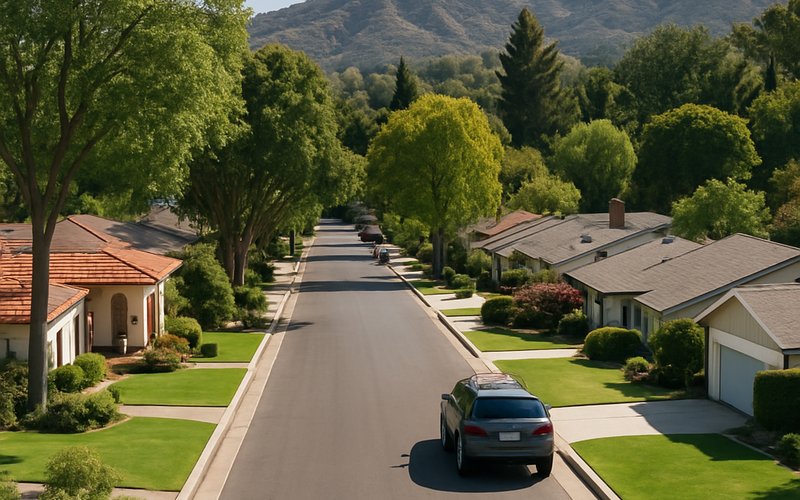
Even within Tarzana, rodent activity and exterminator costs aren’t uniform. Where your home sits affects what you’ll pay.
Braemar and Melody Acres sit closest to the canyon edge and natural wash corridors. Homes here tend to be older, with more complex rooflines and mature tree canopy. Roof rat activity is highest in this pocket, exclusion work is more involved, and attic contamination is more common. Full-scope jobs here regularly hit the $2,500–$4,500 range. Re-service calls are also more frequent because the pressure from surrounding habitat never fully stops.
Tarzana Hills, the hillside section of the community, brings a different challenge. Hillside lots often have crawl spaces, steeper rooflines, and more complex access. Crawl space inspection and cleaning adds cost, and exclusion work on multi-level hillside homes takes longer. Budget an extra $400–$800 compared to a flat-lot property for the same scope of work.
The flatter grid streets near Reseda Boulevard tell a different story. These are more likely to be slab-foundation homes, which changes the rodent profile. Norway rats, which burrow rather than climb, are more active in this zone. They get in through gaps around pipes, garage doors, and foundation cracks rather than through the roofline. Exclusion costs are often lower here, $600–$1,500 for a typical job, but bait station maintenance is more ongoing because the ground-level pressure doesn’t stop.
Valley-wide rat pressure has been elevated across the San Fernando Valley for the past several years, and Tarzana’s position at the western edge, adjacent to both open space and dense residential development, puts it consistently above the valley average for infestation rates and re-treatment frequency.
How to Choose the Right Rodent Exterminator in Tarzana Without Overpaying
Before you hire anyone, check two things immediately: their California Structural Pest Control Board (CPCB) license and whether they’ll give you a written, line-item quote. Both are non-negotiable.
Here’s what a legitimate rodent exterminator in Tarzana should provide:
- Written quote with each service broken out by cost: inspection, trapping, exclusion, attic work listed separately
- A minimum 1-year written guarantee on exclusion work, with clear terms for what triggers a re-service
- Proof of liability insurance and their CPCB license number
- A clear explanation of which species they’ve identified (Norway rat vs. roof rat) and how that changes their approach
- A specific timeline: most standard jobs take 2–4 weeks from first service to confirmed clearance
Red flags to watch for: verbal-only quotes, no written warranty, contractors who recommend poison-only programs without any exclusion sealing, and anyone who can’t name the specific entry points they’re sealing on your property.
There’s also a real difference between a general pest control company and a rodent specialist. General pest companies handle everything from ants to termites. Rodent specialists focus entirely on rodent behavior, exclusion technique, and attic remediation. For a Tarzana property with real structural exposure to rat pressure, that specialization matters. The professional rodent control los angeles approach from a rodent-focused team means they’re not adapting a general pest protocol to your specific problem. They’re doing the work they do exclusively, every day.
Get at least two written quotes. Compare them line by line, not total cost. A lower total price that skips attic sanitizing or uses a 90-day warranty instead of a 1-year one isn’t actually cheaper. You’ll pay the difference on re-treatment within months. Tarzana’s rodent pressure doesn’t give you much margin for incomplete work.
