

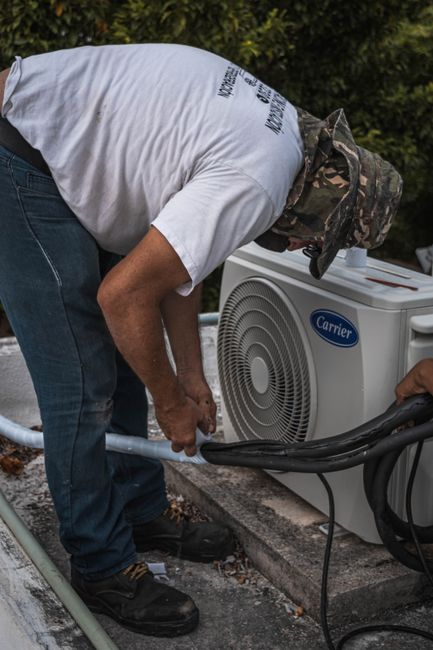
A new HVAC installation can leave a small doorway into your attic. Gaps around new wall, roof, or exterior openings may give rodents a way into attics, walls, or crawlspaces—and those gaps are harder to inspect once the work is covered.
Why new openings matter
A new penetration does not automatically become a rodent entry point. The concern is a gap around it that connects the outside to a concealed space. For example, a refrigerant line set might pass through an exterior wall with space left around it. Or a duct might enter the attic through an opening larger than the duct itself. These are examples to check, not assumptions about your installation.
Roof rats and house mice are common concerns in Los Angeles homes. As general guidance, mice can fit through gaps around 1/4 inch wide, and rats through gaps around 1/2 inch wide. That is why an opening that looks minor deserves a look while you can still see it. If you have noticed activity in the attic, walls, or crawlspace before, tell both the installer and us; it helps us assess possible access routes.
Three checkpoints during installation
- Before cuts are made: Ask your HVAC installer where they expect to make wall, roof, or other exterior openings. Share the locations, schedule, and any history of rodent activity with 360 Rodent Control. We can identify which areas need an accessible follow-up check.
- After ducts are positioned, before openings are concealed: This is the most important window. We can assess the openings as built, including accessible edges around ducts and related lines, before walls, chases, or exterior transitions cover them. The installer can confirm which details the system needs; we can assess potential rodent access and appropriate exclusion work.
- Before final close-up, if anything has changed: If a cut moves or another opening is added or enlarged, let us know while it is still accessible. An earlier check cannot account for an opening that was not there yet.
Four questions to ask before work starts
You do not need to manage the technical work. These questions help you make sure both trades know when an opening can be checked:
- Which wall, roof, or other exterior openings are planned, and where will they lead?
- When will each opening be accessible after placement but before it is concealed?
- Who will address gaps around each opening after the installer confirms system requirements?
- If an opening is added, moved, or enlarged, who will notify 360 Rodent Control and arrange a recheck?
Keep the system working as intended
Rodent exclusion means assessing access around an opening—not blocking everything that looks open. Vents, intakes, drains, and service-access areas must never be sealed just because they are openings. Your HVAC installer owns system function, including clearances, drainage, airflow, and materials. We own the rodent-access assessment and exclusion work, coordinated with those requirements.
If you are planning HVAC installation, the best time to arrange rodent proofing in Los Angeles is before the work is covered. If installation is already underway, ask when the new openings will still be visible. We can assess them without asking you to make technical calls about the HVAC system.
- Shortened repeated scheduling advice and put the three inspection checkpoints in one list.
- Added Los Angeles rodent context, general gap-size guidance, and hypothetical examples.
- Moved the first CTA after the explanation of why openings matter while keeping the final CTA at the end.
