

The foam is in place. The garage sweep was replaced. The attic has been quiet for a few nights. Then you notice one fresh dropping near the wall, or catch a faint sound overhead, and the feeling changes immediately. What looked fixed now feels uncertain. In our experience, that is the moment many homeowners realize they may have sealed a symptom, not the route.
We see this a lot across Los Angeles, Ventura County, and Orange County: someone handles the most obvious opening, maybe even more than one, and the house does seem calmer. But rodents rarely use a home in neat, isolated ways. They move through connected paths. A gap outside can lead to a garage edge, which leads to a wall void, which leads to an attic or roofline access point. If no one mapped that larger system, the quiet can be temporary.
Real rodent proofing services are not just about stuffing a visible hole with foam or replacing one worn strip under a door. Whole-home proofing means we inspect the structure by zone, trace how rodents are likely moving between those zones, and seal entry points with the understanding that one opening often relates to several others.
That is also why rodent proofing is different from trap-only work or a generic pest approach. Traps can reduce activity. A basic patch can close one gap. But exclusion is about preventing re-entry. The goal is not just to react to where a rat or mouse was noticed last. The goal is to understand how the house is being accessed in the first place, then close that access network in a durable, rodent-aware way.
Why single-point fixes so often fail in Southern California homes
Southern California homes give rodents plenty of ways to travel. Roof rats can climb fences, trees, vines, and utility lines. Mice can exploit tiny structural gaps around penetrations and transitions. Older homes and mixed-construction details often create small breaks where materials meet: stucco to trim, foundation to siding, vent edge to wall, door frame to slab. A homeowner may correctly identify one weak spot and still miss the route that actually matters most.
We approach proofing as route mapping because rodents do not think in room names. They think in cover, elevation, warmth, and access. A garage is not just a garage to them; it is a sheltered transition zone. An attic is not just overhead storage space; it is a protected travel corridor. A utility opening is not minor if it connects directly into a wall cavity. Once you see the house that way, the limits of spot patching become much clearer.
How a professional rodent-proofing visit should unfold
We start with a rodent-specific inspection, not a quick glance at the last place activity was seen. That means checking multiple zones and looking for droppings, rub marks, gnawing, grease marks, daylight gaps, disturbed insulation, door-edge wear, and elevated access routes.
We connect the clues. Signs at the garage door may relate to attic activity. Exterior gaps near lines or pipes may explain movement inside a wall. This is the part many basic patch jobs skip.
We prioritize openings by risk. Not every gap matters equally. The key is identifying active or likely rodent entry points first, then addressing supporting vulnerabilities that allow travel deeper into the structure.
We choose materials and methods with rodents in mind. A repair that looks sealed is not always a repair that resists gnawing, weather, or movement where different building materials meet.
We follow through after sealing. A complete job includes confirming that the likely access network was addressed, not just announcing that visible holes were filled.
What we look for around exterior edges and foundation transitions
The outside of the home often tells the story first. We pay close attention to where walls meet the ground, where trim meets stucco, where pipes enter, and where small cracks or separations have widened over time. Homeowners sometimes focus on a dramatic hole, but rodents regularly exploit quieter openings at transition points that do not look alarming at first glance.
This is where whole-home thinking matters. An exterior gap is rarely important only because of its size. It matters because of what it connects to. If a gap sits near a utility line, behind dense storage, or beside a sheltered run along the wall, it may be part of a repeating route. Fresh droppings, smudging, or gnaw marks nearby help us decide whether it is cosmetic wear or real rodent traffic.
In Southern California, these lower-level access points also pair with elevated routes more often than people expect. A rat may travel along the yard edge, move up near a service line or stacked item, and continue toward a higher zone later. That is why a foundation inspection cannot be treated as a separate mini-project from roofline and attic review.
The garage is often more than a side issue
Garages get underestimated because they feel less sensitive than kitchens, bedrooms, or living spaces. But garages are one of the most common transition zones in a rodent problem. They often contain stored items, hidden corners, worn door sweeps, side gaps, and utility penetrations that offer both shelter and movement.
We inspect not just the bottom edge of the main door, but the side margins, the condition of the seal, the pedestrian door, the corners behind shelving, and any gaps where pipes, conduits, or framing transitions occur. A new sweep can help, but if the side gap remains, or if the wall behind storage has a separate access point, the garage can stay active.
Just as important is what the garage connects to. In many homes, the garage opens into shared wall spaces, ceiling voids, or attic-adjacent areas. So if someone patches the door but ignores the rest of the garage envelope, the house may still be vulnerable. We want to know whether the garage is the entry point, the staging area, or simply one visible stop along a larger route.
Attic and roofline clues usually point to a bigger access story
When activity shows up above the ceiling, many people assume the attic itself is the problem. More often, the attic is the destination. The real question is how rodents reached it. Roofline transitions, vent edges, eave gaps, lifted materials, and elevated approach paths all matter here.
In our service area, climbing access is a major factor. Fences, trees, vines, and utility lines can help rodents reach upper portions of a home without ever needing a big opening at ground level. Once near the roofline, they only need a vulnerable gap at the right seam or penetration. That is why attic proofing that begins and ends inside the attic can miss the larger picture.
We slow down in this zone because elevated entry points are easy to overlook from the ground. Signs inside the attic, like droppings, runway marks, nesting debris, or disturbed insulation, tell us rodents were there. They do not automatically tell us where they got in. The exclusion work has to connect the attic evidence back to the exterior access path.
Small vent and utility openings can undo bigger repairs
Some of the most frustrating callbacks come from homes where major gaps were addressed but small penetrations were not. Dryer vents, plumbing entries, conduit openings, cable penetrations, and similar details can look too minor to matter. For mice especially, they may be enough. For rats, they can still be important when materials are weak, edges are compromised, or the opening works as part of a larger route.
This is where generic patching often breaks down. A homeowner sees an opening, seals around it, and assumes the job is done. But if the material used is not durable, if the gap extends behind the visible face, or if nearby penetrations were never checked, the repair may fail without looking obviously failed from a few feet away.
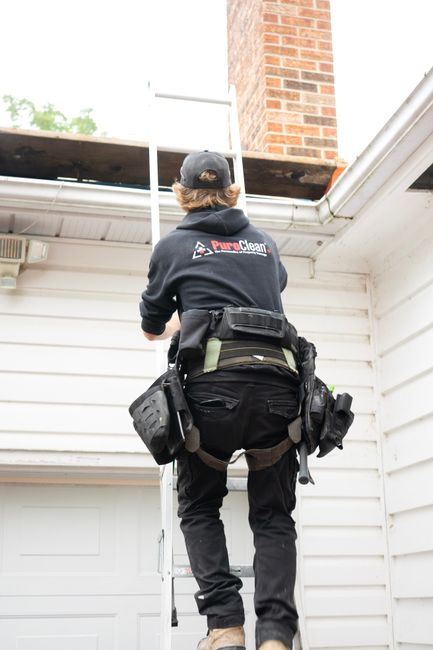
We treat these openings as system weak points. One overlooked vent edge or pipe entry can undermine confidence in an otherwise solid-looking proofing job. That is why detail work matters so much in rodent exclusion. The small overlooked openings are often the difference between a house that feels better for a week and one that stays protected.
When a simple DIY fix may be enough, and when it usually is not
We do not think every tiny gap automatically requires a whole-home service call. If you truly have one isolated, visible opening, no recurring signs, no attic or garage concerns, and no evidence that rodents are traveling through multiple zones, a basic repair may be reasonable. Replacing a worn sweep or closing a clearly minor gap can be useful maintenance.
But DIY starts to break down when the signs repeat, when activity appears in more than one part of the house, when access may be elevated, or when prior patching did not create lasting confidence. If you have already sealed the obvious spots and still do not trust the result, that itself is a clue. It usually means the issue is no longer about patching skill. It is about scope.
The difference is not just labor. It is the ability to read the home as a connected structure. Rodent-specific exclusion works best when the inspection is broad enough to catch the hidden routes that a one-hole-at-a-time approach tends to miss.
How to tell whether the real access network was found and sealed
After service, the best reassurance is not vague language like “everything should be good now.” It is a clear explanation of what was found, how the likely routes connected, which zones were addressed, and why those repairs were prioritized. You should be able to understand the logic of the work, not just the fact that work happened.
A strong proofing scope usually leaves you with observable confidence points: documented problem areas by zone, visible sealing at key access points, attention to both lower and elevated routes, and a plan that makes sense in relation to the signs you had before. If the attic had activity but no one discussed roofline access, that is a gap in the reasoning. If the garage showed droppings but wall transitions and door edges were not part of the conversation, that is also worth questioning.
We also tell homeowners to pay attention to what happens after the house goes quiet. Quiet is good, but quiet alone is not proof. The real sign of success is that the pre-service pattern makes sense, the sealed areas match that pattern, and no overlooked zone was simply assumed away. In other words, the result should feel explained, not just hoped for.
What a complete proofing scope should include before you approve the work
A rodent-specific inspection that covers more than the room where signs were noticed
Zone-by-zone review of exterior edges, garage areas, attic or roofline, vents, and utility penetrations
An explanation of how the suspected entry route connects across the house
Sealing priorities based on likely rodent access, not just cosmetic gaps
Durable, rodent-aware repair methods rather than simple filler alone
Post-service confirmation that the true re-entry network was addressed
If you are at the point where the house is quieter but you still do not feel sure, that checklist matters. A complete scope should reduce uncertainty, not leave you guessing whether anyone found the real route.
Common questions homeowners still have
If the house is quiet now, can it still need proofing?
Yes. Quiet can mean activity dropped, trapping worked, or a temporary access point changed. It does not guarantee the home is protected against re-entry. If the underlying openings remain, rodents can return.
Should proofing happen right after rodent removal?
In many cases, yes. Removal and proofing work together. If rodents are removed but access points stay open, the house can become vulnerable again quickly. The timing should support both elimination and re-entry prevention.
Is spray foam enough to keep rodents out?
Not by itself in many situations. Foam may fill space, but rodent proofing depends on whether the material is appropriate for the location, whether the opening was fully understood, and whether nearby connected gaps were also addressed.
What if I only found signs in the garage?
The garage may be the only place you noticed activity, but it may not be the only zone involved. Because garages often connect to walls, ceilings, storage voids, and adjacent parts of the structure, a broader inspection is usually the safer way to understand the full picture.
When homeowners call us for rodent proofing services, we focus on documenting the house by zone, identifying how rodents are actually moving, and sealing with long-term prevention in mind. That is the kind of whole-home approach 360 Rodent Control is built to provide: careful inspection, family-safe methods, respect for your space, and the peace of mind that comes from knowing the route—not just the symptom—was addressed.
