

You hear scratching above the ceiling after dark. The next evening, something darts along the backyard fence near the citrus tree. At that point, the question is not just whether you have rats. It is whether you are dealing with roof rats or Norway rats, and whether you have been checking the wrong parts of the property the whole time.
In Los Angeles, Ventura County, and Orange County, that distinction matters more than most homeowners realize. We often meet people who focused on the attic because of the noise, or on the yard because of the droppings, when the real answer was hidden in how the rats were traveling. You do not need a perfect sighting to make a smarter call. You do need to know which clues actually mean something.
Get a professional inspection that follows the real clues
If the signs point to the attic, roofline, fence routes, foundation, or all of the above, a species-specific inspection can help you stop guessing and start with the right plan. 360 Rodent Control serves Los Angeles, Ventura County, and Orange County with eco-friendly, family-conscious rodent solutions.
- If activity is high up along fences, trees, utility lines, eaves, or attics, roof rats move to the top of the suspect list.
- If signs are concentrated at ground level near foundations, crawlspaces, dense cover, or burrow-like areas, Norway rats become more likely.
- Noise location matters: overhead scratching points one way; heavy movement low in walls, subareas, or near the slab can point another.
- Yard clues matter in Southern California: citrus, avocado trees, ivy, thick shrubs, and fence routes often support roof-rat travel.
- The big takeaway: species changes the treatment plan, including where we inspect, where we trap, and what we seal first.
Homeowners usually ask us some version of the same thing: the rats are in the attic, yard, or walls, so what kind are they, and does it really change anything? Yes, it does. A generic rat treatment can miss the problem if it assumes all rats behave the same way.
Where you hear them
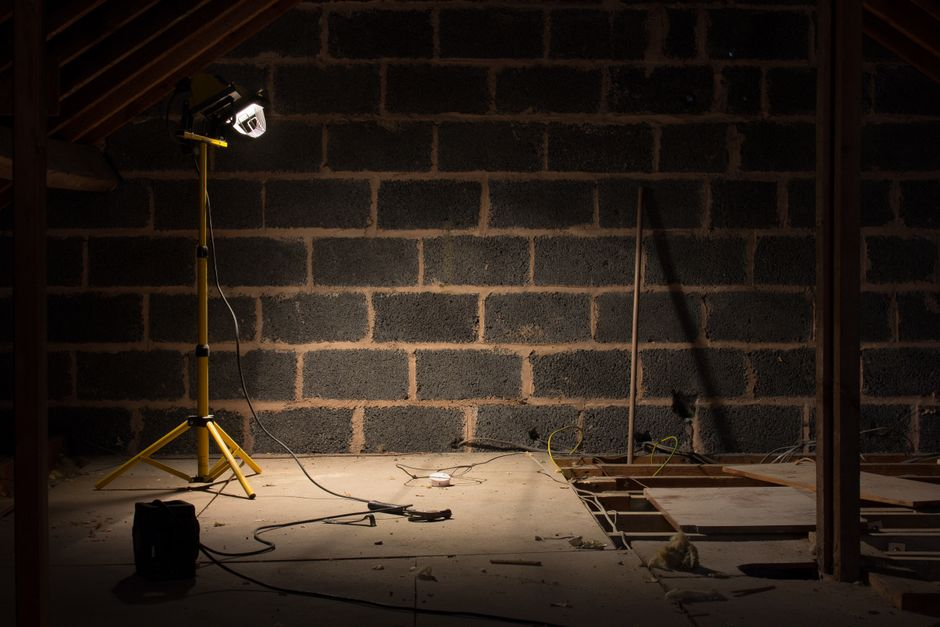
Sound is often the first clue. If the noise is clearly above the ceiling, near the roofline, or moving through upper wall voids at night, that tends to fit roof-rat behavior more closely. Roof rats are climbers. They use elevated routes and are comfortable nesting and traveling in attics, rafters, garage ceilings, and other upper areas.
That does not mean every attic rat is automatically a roof rat. We do not like blanket assumptions. But when the sounds are concentrated overhead and you also have tree limbs touching the roof, fence-line movement at dusk, or droppings in elevated storage, the pattern starts to line up.
Norway rats are more associated with ground-level movement. In homes, that may show up as activity near lower wall spaces, crawlspaces, utility penetrations, garages, sheds, foundation edges, or beneath decks and slabs. People sometimes describe the movement as heavier or lower, though sound alone is never enough for a final call.
Where droppings appear
Droppings are useful because location tells a story. If they are showing up in attics, on top of stored boxes, along garage beams, near water heaters with nearby vertical access, or along elevated ledges, roof rats are a stronger suspect. If droppings keep appearing along baseboards, behind appliances, near garage door gaps, around foundation edges, or close to exterior clutter and dense ground cover, that leans more toward Norway-rat patterns.
One of the most common mistakes we see is treating droppings as a general sign of “rats somewhere” instead of asking where the droppings are concentrated and what route would have brought the animal there. That route is usually more important than the droppings by themselves.
Where nesting is likely
Roof rats prefer elevated, protected harborage. In our service area, that can mean attics, insulated voids, garage lofts, cluttered storage above head height, dense vines on structures, and sheltered roof-adjacent areas. Homes with mature landscaping often give them exactly what they want: concealment, food, and easy climbing access.
Norway rats are more likely to use ground-oriented shelter. Think burrow-prone areas, crawlspaces, subareas, voids close to the foundation, debris piles, thick shrub bases, and hidden spaces around lower utility lines or structural openings. If the property has soft soil, heavy ground cover, and neglected perimeter conditions, that becomes more relevant.
How they travel
This is where many Los Angeles properties give the answer away. Roof rats are excellent climbers and habitual route users. We look for fence tops, tree limbs, utility lines, vines, trellises, stacked materials near walls, and any pathway that lets a rat stay elevated while moving toward the roof. If you are seeing movement at dusk along a fence near fruit trees, that is not random. It is often a travel corridor.
Norway rats usually make more use of ground routes. They hug walls, move along foundations, use cover at shrub level, and exploit openings at or below lower structure lines. They can climb, but their pattern is usually less about living high and more about feeding and sheltering from the ground up.
What the yard is telling you
Southern California landscaping changes the picture. Citrus and avocado trees, fallen fruit, dense ivy, thick ornamental shrubs, overgrown side yards, clutter behind sheds, and fences that create uninterrupted runs all increase the odds that roof-rat activity outdoors will become an indoor problem. Homeowners are often surprised that the yard is not a separate issue from the attic. In roof-rat cases, the yard is often the highway to the attic.
On the other hand, if the strongest signs are low to the ground around trash areas, foundation gaps, crawlspace vents, soil disturbance, or hidden perimeter voids, we start thinking harder about Norway-rat behavior and whether the entry problem begins at the lower envelope of the building.
A side-by-side way to compare the patterns
| Clue | Roof rats | Norway rats |
|---|---|---|
| Most telling activity zone | Attics, eaves, upper walls, roofline, trees, fences, utility lines | Foundation edges, crawlspaces, lower walls, garages, burrow-prone ground areas |
| Typical travel style | Elevated climbing routes | Ground-hugging perimeter routes |
| Common yard clues | Fruit trees, ivy, shrubs touching structure, fence-top sightings at dusk | Dense ground cover, lower openings, hidden perimeter shelter, soil-level access |
| Likely nesting zones | Attics and elevated voids | Burrows, crawlspaces, low structural voids |
| Where treatment often starts | Roofline, attic access, elevated routes, vegetation contact points | Foundation, subarea, lower entry points, ground harborage |
If your clues are mixed, do not force a guess. We sometimes find overlapping evidence, and in some properties both species can be possible. In those cases, the best approach is to prioritize the freshest signs, the clearest travel routes, and the entry points that actually match the behavior on the property. That is exactly why species-specific inspection matters more than DIY trial and error.
Why the ID changes the control plan
This is the part generic service often gets wrong. If roof rats are using elevated routes but traps are placed mostly at ground level, results may be slow, inconsistent, or short-lived. If Norway rats are entering low and the work focuses mostly on attic symptoms, the real access points may stay active. Homeowners then feel like the problem “came back,” when in reality the original plan never matched the species behavior.
When roof rats are the likely culprit, we start by reading the upper structure and the landscape around it. We inspect roof returns, eaves, attic vents, utility penetrations, garage roof intersections, tree contact points, fence connections, and any elevated route that helps rats move from yard to structure. Trap placement logic changes too: the productive zones are often in attics, along runways, and near known elevated activity, not simply wherever it is easiest to set something on the ground.
Exclusion priorities also shift upward. We look for openings at the roofline, gaps around upper penetrations, and access created by vegetation or stored materials that let rats bridge into the structure. Yard correction becomes part of the plan, not an optional extra. Pruning limbs away from the roof, reducing dense cover, and addressing fruit and harborage conditions are often essential in keeping the pressure down.
When Norway rats are more likely, the inspection starts lower. We pay close attention to foundation gaps, crawlspace vents, garage edges, utility entries, door sweeps, hidden perimeter voids, drainage-adjacent areas, and shelter at ground level. Trap placement follows the rats’ actual movement paths near the base of the structure. Exclusion focuses first on lower access points, not just the attic symptoms homeowners notice later.
Cleanup concerns can differ in emphasis too. Roof-rat cases often involve attic contamination, insulation disturbance, and overhead nesting debris. Ground-oriented rat activity may create heavier contamination in garages, crawlspaces, storage edges, and perimeter utility zones. In both cases, cleanup matters because leaving contaminated areas behind is not the same as solving the infestation.

For families with kids and pets, this is where good planning becomes reassuring. Low-toxicity rodent control is not about hoping for the best with a generic treatment. It depends on accurate inspection, smart placement, secure methods, and sealing the right access points so the home does not stay attractive to rats. We build safer plans by matching the strategy to the evidence instead of blanketing the property with guesswork.
When repeat signs mean it is time to stop experimenting
If you cleaned up droppings and they came back within days, if you still hear movement after earlier service, or if you keep seeing rats on fences or near the roofline at dusk, that is a strong sign the infestation is active or the plan has been too generic. The same is true when the clues do not neatly fit one species and the problem keeps shifting from yard to attic to garage.
At that stage, the sensible next move is not to try harder at guessing. It is to get a specialist inspection that reads the evidence as a pattern: where the rats are entering, how they are traveling, which species is most likely driving the activity, and what exclusion and cleanup will actually make the result last.
That is the difference we focus on at 360 Rodent Control. We are not trying to treat your home like a generic pest stop. We inspect for the behavior that matches Southern California rat problems, build species-specific trapping and exclusion plans, and use eco-friendly, pet- and child-conscious methods designed to solve the infestation without leaving harmful toxins behind.
Common questions homeowners ask us
Are rats in the attic always roof rats?
No. Attic activity often points toward roof rats, especially in Los Angeles-area homes with nearby trees, fences, and roof access, but attic noise alone is not a final diagnosis. We look at the full pattern, including outdoor routes, droppings, nesting clues, and likely entry points.
Can both roof rats and Norway rats be present on one property?
Yes, it is possible, especially on larger or more complex properties with both elevated harborage and strong ground-level shelter. That is one reason mixed clues should not be brushed off. A proper inspection helps separate overlapping activity.
Do I need to identify the rat myself before calling?
No. In most cases, you do not need to see or catch the rat. The better approach is to document what you notice: where the noise happens, where droppings appear, what time you see movement, and what yard features may be supporting access. We can use those clues to build the right inspection path.
If the signs around your home are pointing upward toward the roofline, downward toward the foundation, or frustratingly in both directions, 360 Rodent Control can help you sort out what is really happening. A species-specific inspection is often the fastest way to stop wasted time, misplaced traps, and repeat infestations—and to move toward real exclusion, cleanup, and lasting peace of mind.
Still hearing scratching, finding droppings, or seeing rats at dusk?
When signs keep returning, generic treatment usually misses the real entry points and travel routes. 360 Rodent Control builds species-specific plans for inspection, trapping, exclusion, and cleanup using eco-friendly methods that are mindful of pets and children.
