

Rat droppings are dark, capsule-shaped pellets about the size of a raisin. They’re the single most reliable sign that rats are active inside a structure. Most guides online recycle the same generic bullet list. This one reads the way a field technician would walk you through it, covering species identification from droppings alone, colony-size estimates from quantity, and the cleanup rules that keep you from turning a gross discovery into an airborne health hazard.
If you live in Los Angeles or anywhere in Southern California, roof rats are your most likely uninvited tenant, and their droppings look slightly different from what most national pest sites describe.
In this guide, you’ll learn:
- The two physical details that separate rat droppings from every common lookalike
- How a pencil test on a single pellet tells you if the infestation is active right now
- Why droppings in your attic almost always point to one species in Los Angeles
- The cleanup mistake that turns a minor health risk into an airborne one
- A rough formula for estimating how many rats are living in your home
Size, Shape, and Color Up Close
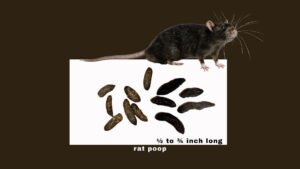
What does rat poop look like when you find it behind a kitchen cabinet or scattered across attic insulation? It’s a dark brown to black pellet, ½ to ¾ inch long, smooth-surfaced, and shaped like a small capsule or oval with slightly tapered or blunt ends. Hold one next to an olive pit or a dark raisin, and the size match is close.

The color starts near-black when fresh and fades toward gray as the pellet dries out over days or weeks. Surface texture matters too. A fresh dropping looks shiny, almost wet. An old one looks chalky and dull.
One number catches most homeowners off guard. A single rat produces 40 to 50 droppings per day. That means even a small scattering of pellets behind your stove didn’t come from one visit. If you’re seeing 10 or 15 droppings in a tight cluster, that rat has been running the same route repeatedly, or you’ve got more than one.
Roof Rat vs. Norway Rat (What the Droppings Tell You?)
Two species account for nearly every rat infestation in the United States, and their droppings differ enough to identify them on sight.
- Roof rats (Rattus rattus) leave ½-inch pellets with pointed or tapered ends. You’ll find them in attics, along rooflines, inside palm skirts, and on elevated surfaces. This is the dominant species across Los Angeles and Southern California. Mild winters and dense tree canopies give roof rats year-round overhead access to residential structures.
- Norway rats (Rattus norvegicus) drop larger pellets, up to ¾ inch, with blunt, rounded ends. These show up at ground level in crawl spaces, basements, and near sewer lines.
The species tells you where to look for entry points. Roof rat droppings in the attic mean gaps at the roofline, unscreened vents, or tree branches within four feet of the structure. Norway rat droppings in the crawl space mean cracks in the concrete stem wall or unsealed utility penetrations at ground level. A roof rat infestation missed because someone only checked the ground floor is one of the most common callbacks in rodent-proofing work.
Rat Poop vs. Mouse, Squirrel, and Cockroach Droppings
Correct identification saves you from treating the wrong pest. Here’s how to confirm what you’re looking at.
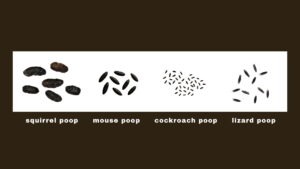
- Mouse droppings are ⅛ to ¼ inch long, shaped like a grain of rice, and pointed at both ends. They’re scattered widely because mice defecate on the move. If the pellets are smaller than a sunflower seed, you’ve got mice, not rats.
- Squirrel droppings run about the same length as rat pellets but are lighter brown, barrel-shaped, and deposited in a concentrated latrine pile. Rats scatter droppings along their travel routes. A tight pile of similar-sized droppings in an attic leans squirrel.
- Cockroach frass is far smaller, ridged along the sides, and looks like ground pepper or coffee grounds. You’ll find it inside cabinet joints, behind drawer slides, and along baseboards.
- Lizard or gecko waste is the easiest to rule out. It has a white uric acid cap on one end. No rodent dropping ever has a white tip. If you see one, cross rats off the list.
The Pencil Test (How to Tell Fresh from Old?)
Age tells you more than presence. A pile of droppings confirms rats have visited. Freshness confirms they’re still there.
Press a pencil tip gently against a pellet. Fresh droppings give slightly, feel soft, and look dark and glossy. They mean activity within the last 24 to 48 hours. Old droppings crack or crumble under the same pressure. They’re gray, dry, and dusty. They mean past activity.

The real diagnostic value lies in the mix. Fresh and old droppings in the same spot signal an established run with repeat nightly traffic. All old droppings and no fresh ones might mean the rats relocated, but the contamination hasn’t gone anywhere and still needs professional attic cleaning and decontamination.
Fresh droppings that reappear after a cleanup or treatment are the clearest sign that entry points weren’t sealed properly. Exclusion work needs to happen before anything else.
Counting Droppings to Estimate Colony Size
Most articles skip the math. The numbers are simpler than you’d guess.
At 40 to 50 droppings per rat per day, the math is straightforward. If you clear a section of attic and find 200+ fresh pellets the next morning, you’re not dealing with a single roof rat. You’ve got four or five at minimum.
Pellets concentrated along a single rafter or wall line suggest a well-worn run between a nest and a food source. Scattered droppings across multiple rooms point to an established colony actively exploring new territory.
These counts aren’t lab-grade precision, but they give a homeowner a realistic sense of how serious the problem is before a technician arrives for a full inspection. The difference between “one rat got in” and “a colony has been here for weeks” changes the scope of every treatment and cleanup job.
Where Droppings Show Up (and What That Location Means)?
Location is a diagnostic clue, and it tells you more than the droppings alone.
- Droppings along attic rafters and embedded in blown-in insulation point to roof rats using overhead entry. Check ridge vents, gable vents, and any roofline gap wider than a quarter.
- Droppings behind kitchen appliances or inside cabinet voids mean rats have food-source access, usually through an interior wall chase or a plumbing penetration they’ve widened by gnawing.
- Droppings in garage corners near stacked cardboard signal nesting material within reach. Rats shred cardboard for nest-building.
- Droppings on crawl space soil along perimeter walls point to Norway rats burrowing in from outside. Look for half-dollar-sized burrow holes in the dirt within two feet of the exterior wall.
Any droppings near electrical wiring or HVAC ducts raise the stakes beyond the rodent problem. Gnawed wiring creates a fire risk. Contamination near ductwork can spread pathogens through the air system every time the HVAC cycles. If droppings or urine staining show up near insulation, that material is compromised and needs replacement.
Why Shouldn’t You Sweep or Vacuum Rat Droppings?
This is the most dangerous cleanup mistake, and it’s the one homeowners make most.
Dried rat droppings crumble into fine particles. A broom or vacuum launches those particles straight into the air you’re breathing. That’s the primary transmission route for hantavirus, and it’s also how leptospirosis and salmonella exposure happens indoors.
The CDC cleanup protocol is specific.
- Ventilate the space for 30 minutes with doors and windows open.
- Wear rubber or latex gloves and an N95 respirator. Spray droppings with a bleach solution (1.5 cups of household bleach per gallon of water) or an EPA-registered disinfectant.
- Let the solution soak for 5 full minutes.
- Wipe everything up with paper towels, double-bag the waste in sealed plastic bags, and dispose of it in an outdoor bin. Disinfect all surrounding surfaces.
- Wash your hands with soap and water after removing gloves.
For a few droppings behind the stove, that protocol works fine. For an attic full of contaminated insulation, droppings spread across a crawl space, or any contamination near HVAC equipment, DIY cleanup creates more exposure than it removes. That’s the line where professional decontamination and insulation replacement become the safer call.
What to Do After You’ve Confirmed Rat Droppings?
If you’ve confirmed rat droppings in your home, the next move is finding where they’re getting in and making sure the contamination is dealt with safely.
We serve Los Angeles and Southern California with rodent-proofing, attic decontamination, crawl space cleaning, and insulation replacement. Call (818) 853-2882 or visit the contact page to schedule an inspection.
FAQ
1. Do rat droppings have a smell?
Fresh pellets carry a faint musty scent you might not notice on their own. The strong ammonia odor people associate with a rat problem comes from urine, which rats deposit alongside droppings on every travel route they use. If you smell ammonia in the attic or a wall cavity, the infestation is well-established.
2. Can dried-out droppings still cause illness?
Yes. Crumbled droppings release dust that can carry hantavirus and bacterial pathogens. The CDC treats all rodent droppings as potentially infectious, regardless of how old they appear. Don’t assume faded, gray pellets are safe to handle bare-handed.
3. I found droppings in my attic, but never heard scratching. Does that mean the rats left?
Not necessarily. Roof rats are quieter than most homeowners expect, and their peak activity runs between midnight and dawn. Dark, shiny droppings confirm ongoing activity even when you never hear movement overhead.
4. Should I photograph droppings before cleaning them up?
A quick phone photo helps a technician confirm species and activity level before the on-site visit. You don’t need to collect or save droppings. Just photograph them next to a coin or ruler for scale, then clean up following the CDC protocol above.
5. My neighbor just had rats treated. Should I check my own home?
Yes. Rats displaced from one property will move to the nearest available shelter. Inspect your attic, garage, and crawl space for fresh droppings within two to three weeks of any nearby treatment. Early detection makes exclusion work far simpler and cheaper.
6. How fast do droppings accumulate after rats move in?
A single roof rat drops roughly 300 or more pellets in one week. Two or three rats sharing an attic run will produce well over 1,000 pellets in that same period. If you’re seeing heavy accumulation, the colony has likely been there longer than you think.
